City of Brasov – “Fortress of the Seven Bastions”

City of Brasov - Fortress of the Seven Bastion - Brasov City in Transylvania

In a harmonious fusion of historical heritage and stunning landscapes, once one of the strongest and most beautiful fortresses of Transylvania, today’s multicultural city reveals itself among medieval walls and towers, elegant streets and alleys full of atmosphere, always ready for adventures to the peaks of the surrounding mountains!

An eternal bridge between the south of the country and Transylvania, Brașov is considered by many to be the tourist capital of Romania, with an impressive number of historical monuments, but also being the starting point for countless memorable mountain hikes. With ancient roots that go back to the 13th century, the city was founded by Saxon colonists and Teutonic Knights, around already existing Romanian and Hungarian settlements. In the centuries that followed, it developed into one of the strongest fortresses in Transylvania, being defended by walls with numerous bastions, but also by the forested peaks of the surrounding mountains and hills.

The fortress thus became one of the major commercial and cultural centers of the region, with 43 guilds attested in 1798. Among the most important historical events, the construction of the Church of “Saint Mary” (today’s Black Church) lasted approximately 100 years, and the extensive fortifications were erected during the reign of Iancu de Hunedoara, changing the appearance of the medieval city. The fortress at one time had 7 or 8 bastions, 32 defense towers, 4 or 5 gates and two or three systems of walls. On April 21, 1689, a great fire engulfed the entire fortress and destroyed many of the old buildings, the reconstruction lasting over a century.

We can reach Brașov quite easily from any part of the country, the city being connected to both the south of the country and the rest of Transylvania by several important roads. The most popular, but also the busiest, of these is DN1, which passes through the Prahova Valley and continues westwards. Other roads that can be used include DN1A through Cheia, DN73 through the Rucăr-Bran corridor, DN11 from the east or DN13 from the north, in addition to the railway line connecting Bucharest to the centre of the country. A modern international airport has also recently opened near Brașov.

City of Brasov - Fortress of the Seven Bastion - Brasov City in Transylvania

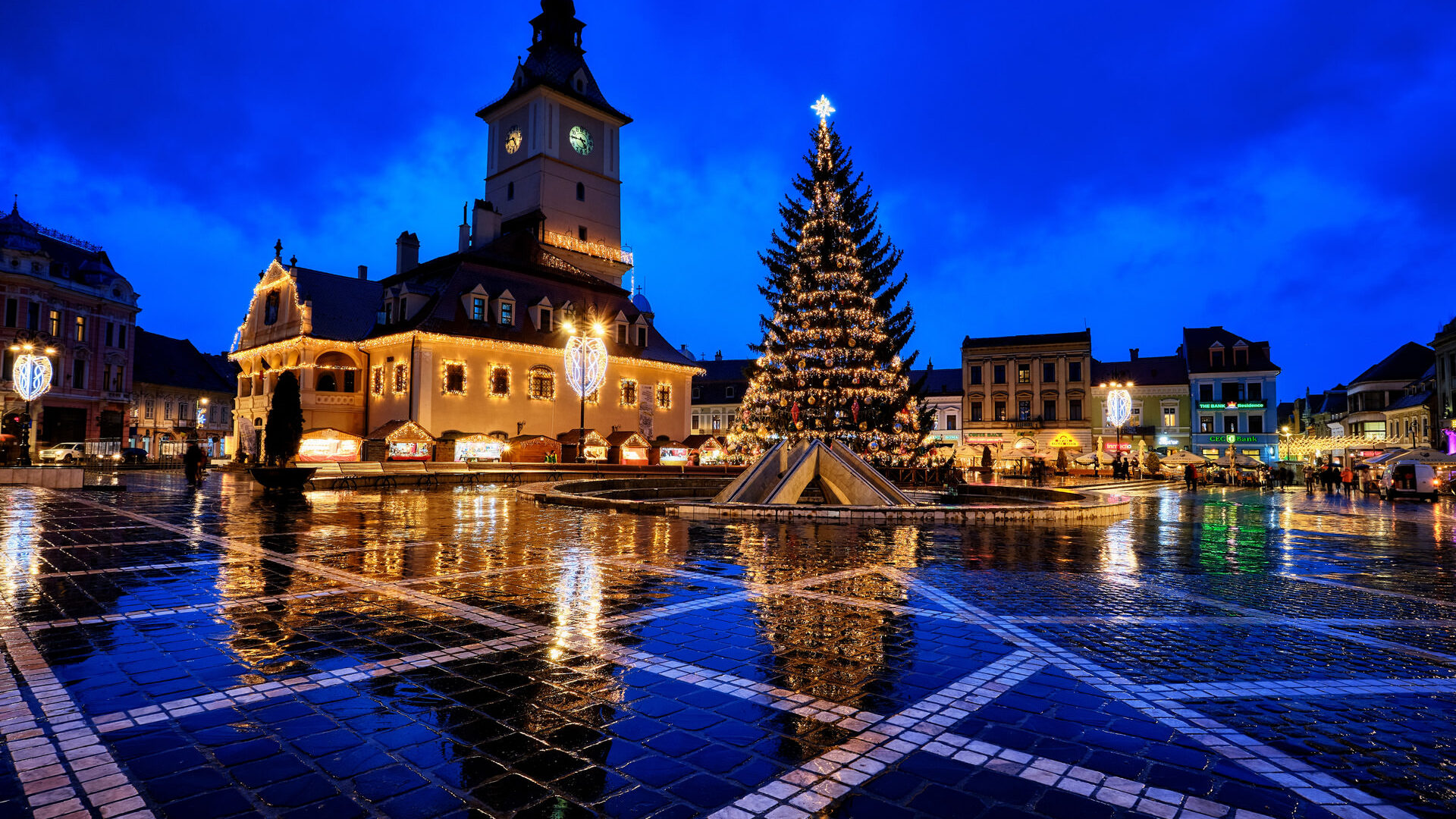
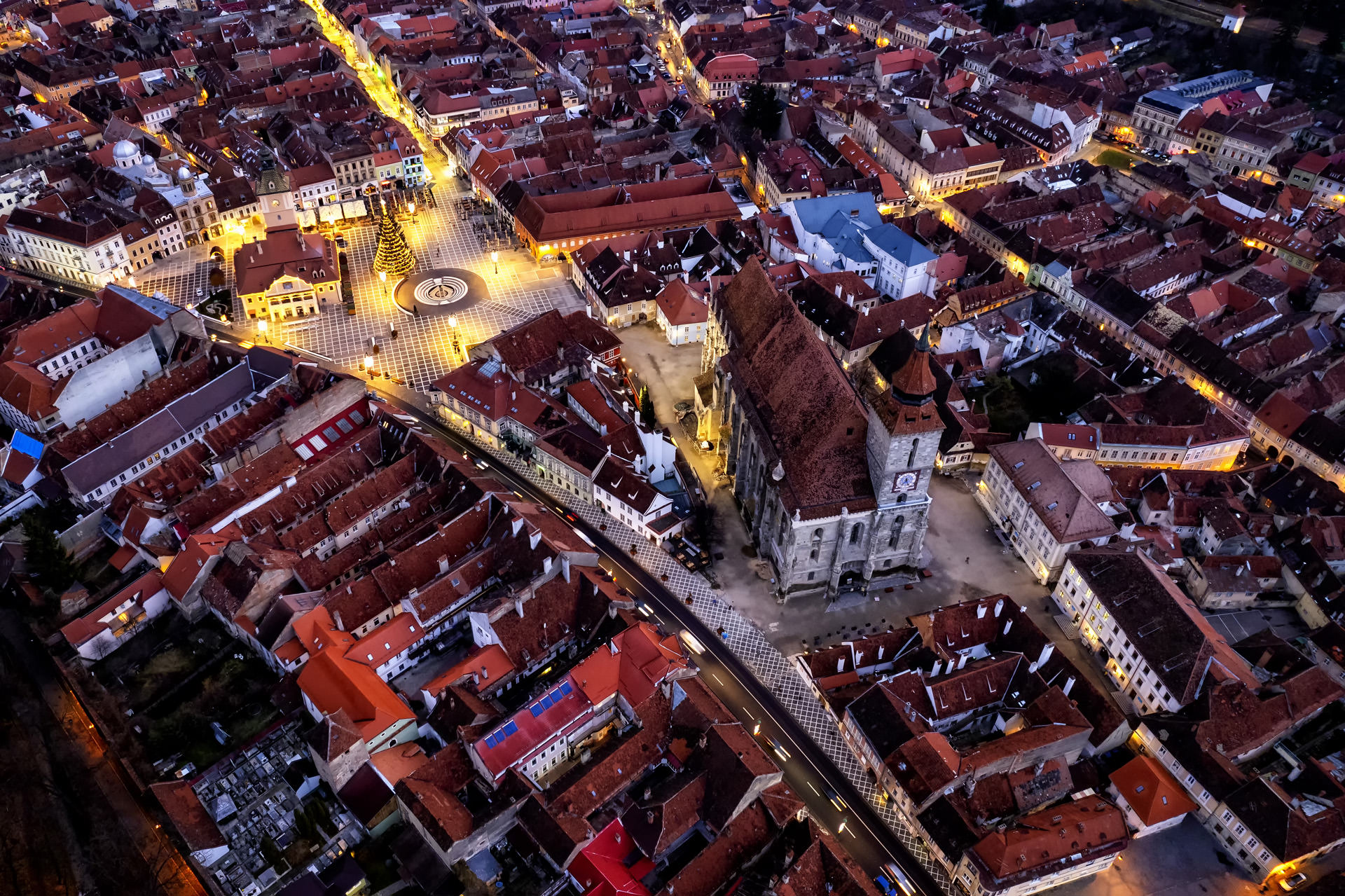
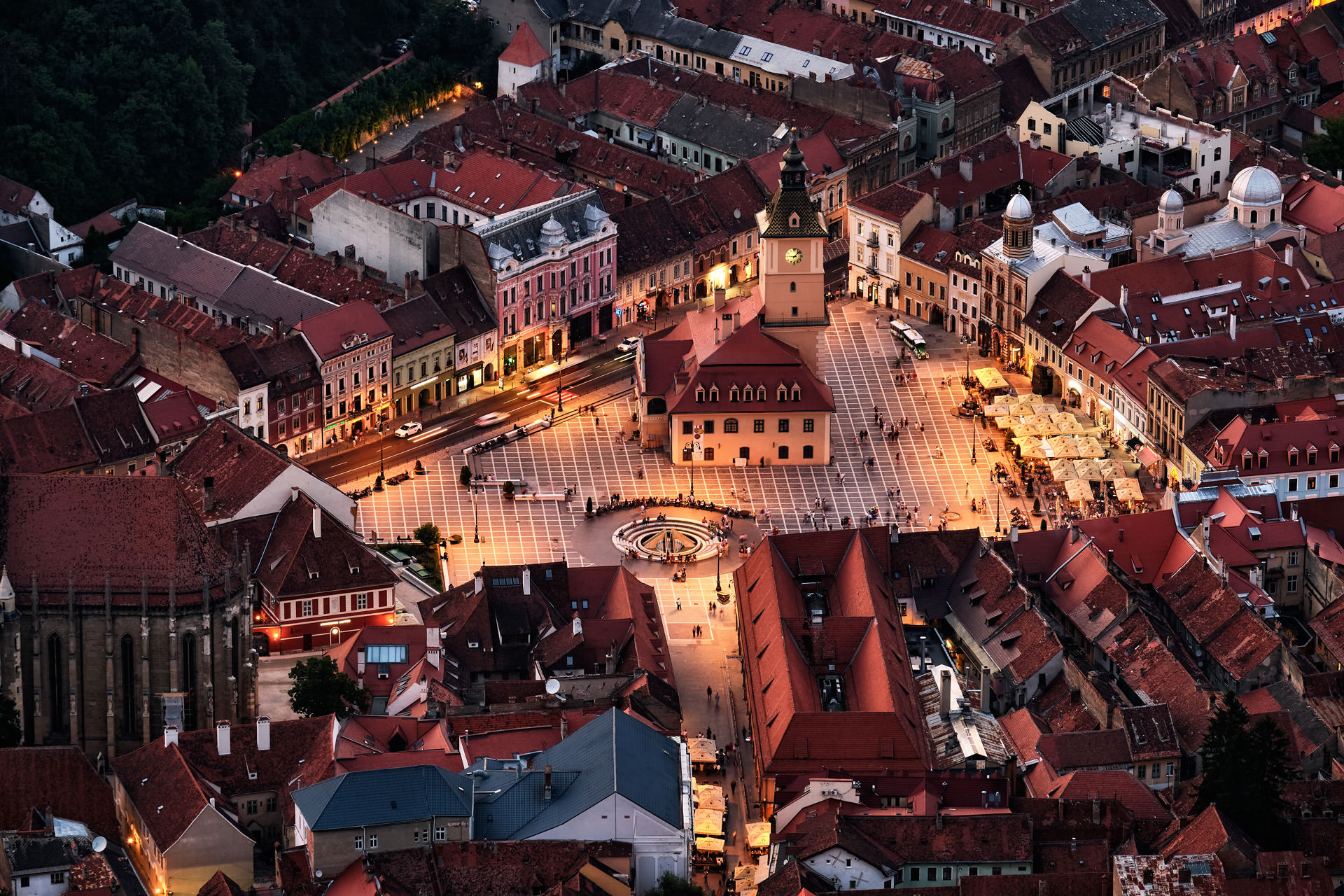
The best place to start exploring Brașov is in the heart of the old citadel, where the Council Square is today. In the Middle Ages, the square was the meeting point for merchants and artisans from all over Transylvania and beyond, and over time, it was surrounded by imposing buildings, some of which still bear the features of medieval architecture. Approximately 30 buildings in the Council Square have been designated historical monuments, the most interesting including the Church of the Assumption of the Virgin Mary, the Merchants’ House, the Mureșenilor House, the Museum of Urban Civilization and others, but none of them catches our attention like the one located right in the center of the square.

Now known as the Council House, this is actually the old city hall of the city, but was originally built as an observation tower. It is almost six centuries old and has been modified several times in the past, the Baroque style dating back to the great fire of 1689. Today, inside we can visit part of the Brașov History Museum, which presents the past of the city and of Țări Bârsa from ancient times, passing through the glorious medieval period and the modern era.

While exploring the square and the surrounding streets, we cannot overlook the Black Church and its majestic silhouette, one of the striking symbols of Brașov. It is considered the most important Gothic monument in Romania and the largest Gothic church in southeastern Europe. It is dedicated to the Virgin Mary and was built by the Saxon community over the course of almost 100 years, starting in 1383, over an older Romanesque church. The descriptive name comes from the blackened walls, resulting from the devastating fire. Among the most impressive features, we can admire the Baroque interior with its 200-year-old organ, the beautiful neo-Gothic altar, the priceless collection of Oriental carpets, a treasure trove of religious textiles, and a 14th-century fresco of the Virgin Mary.

City of Brasov - Fortress of the Seven Bastion - Brasov City in Transylvania

Around the old fortress, we can still discover many of the original medieval fortifications, some of which have been renovated and incorporated into the contemporary urban experience. Most of the massive walls have been preserved in the southern part of the old city, where two of the old entrance gates, several defensive towers, and some of the fortified bastions that earned it the nickname of the fortress of the seven bastions have survived. We can admire all of these impressive historical monuments by following a circuit around the old fortress, starting along the recreation area at the foot of Tampa Hill.

The first point of interest is the Weavers’ Bastion, which preserves its unique original architecture. From here, following the high wall to the northeast, we encounter several towers and two of the old bastions, the Funari and the Postavari, located in the northeast corner. Continuing northwest, the modern city has covered the traces of the medieval fortifications, their place being taken by the newer buildings erected along Eroilor Boulevard. Reaching the George Barițiu Library, we turn southwest along După Ziduri Street, with its bohemian atmosphere, which slips between the old walls and a small stream flowing at the foot of the hill.

In addition to the Blacksmiths and Graft bastions, two impressive towers also rise on the nearby hill. Built at the end of the 15th century, the White Tower and the Black Tower had a dual role in the past, both as defense and observation, and today they offer spectacular panoramas of the old city. Two of the grand entrance gates to the fortress are preserved on the west side, towards the old Romanian quarter of Șchei. The Catherine Gate impresses us with its splendid architecture, having originally been much more extensive and fortified. At the beginning of the 19th century, the Şchei Gate was built to cope with the much heavier traffic.

Entering the fortress again, the authentic Saxon architecture still reminds us of the medieval atmosphere, the streets still preserving an amazing number of monuments that we can admire. Although few buildings date from before 1689, we still find quite a few houses in the provincial Baroque style, similar to cities in Germany and Austria. One of the most fascinating attractions in the fortress is the Rope Street, among the narrowest in Europe, with a width of between 111 and 135 centimeters and being built in the 17th century for easier access by firefighters. Other interesting monuments include the Jekelius House, dating back to the 16th century, the Franciscan church and monastery, the church of “Saints Peter and Paul”, with its superb Baroque architecture, the two synagogues and several museums (Museum of Art, Museum of Ethnography, Museum of Urban Civilization).

Search for Flights to Romania with Booking.com!

City of Brasov - Fortress of the Seven Bastion - Brasov City in Transylvania

As the city developed, it expanded beyond the medieval fortifications, with some notable monuments being built to the west and east, where the modern center of Brașov is located. These include the Palace of Justice (now the Prefecture and County Council), the Financial Administration (now the City Hall), the Post Office Palace, the Chamber of Commerce and Industry (now the George Barițiu Library), Johannes Honterus High School, Andrei Șaguna College, and others. A little further north of the old center, on a small hill rising above Nicolae Titulescu Park, we see the impressive fortification known as the Citadel of the Watchtower, built in the 17th century on top of an older one. It includes a castle-like complex of buildings inside, surrounded by outer walls and strong bastions in each of the four corners.

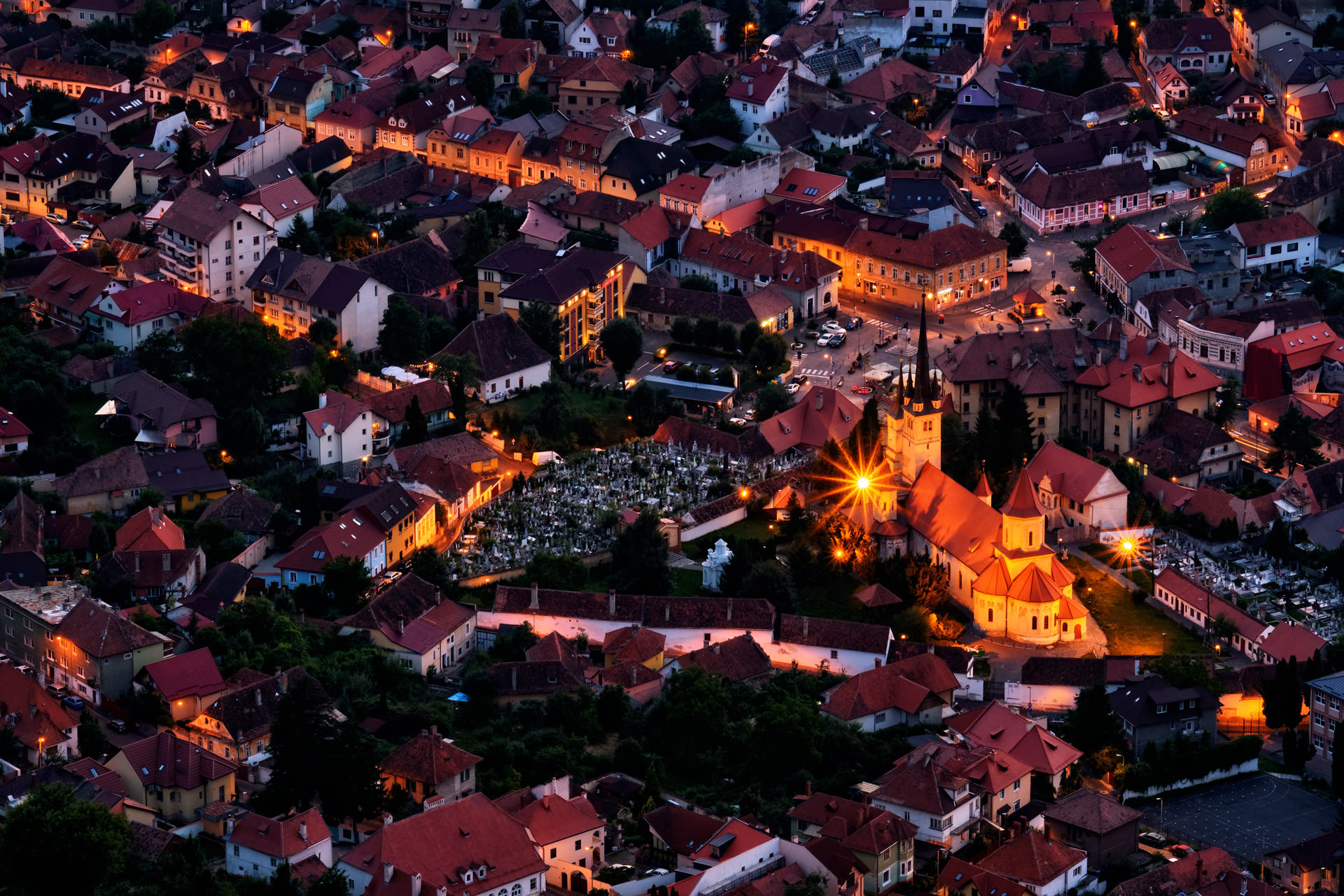
In the southwest part of the medieval fortress, we explore the old Romanian quarter, known as Șcheii Brașovului. This area has a unique charm and an almost rustic atmosphere, with smaller houses along narrow streets, surrounded by wooded hills. There has always been a Romanian settlement here, even before the arrival of the Saxons and the construction of medieval fortifications. We can find the most important monuments around the charming Unirii Square, starting with the “Sfântul Nicolae” Church. It is surrounded by a fortified courtyard and was built with the help of the ruler of Wallachia, starting in 1495, over an older one dating from 1292.

In the courtyard of this complex we can also visit the small museum Prima Școală Românească, housed in a building dating from 1870, but the first Romanian language classes took place here as early as 1583. The Șcheii Brașovului neighborhood is also known for a unique tradition called Junii Brașovului, in which several groups of young riders in traditional costumes parade through the streets on the first Sunday after Easter. We cannot complete the experience of traveling to Brașov without contemplating the famous panorama of the city from the heights of Tâmpa Hill. In the past, there was a fortress known as Brassovia, of which not many vestiges remain, and today the area is a protected natural area. We can reach the top of the hill either by cable car or by climbing a tourist trail that starts near the medieval walls.

Located about 12 kilometers from the city, on the Postăvaru Massif, the Poiana Brașov resort is one of the most popular and spectacular in Romania, being a fascinating destination both in summer and especially in winter, with numerous splendid hotels, but also some excellent ski slopes. From the resort we can climb the gondola that takes us close to the Postăvaru Peak (1,799 meters), where we are rewarded with incredible panoramas of the Bârsei Country and the surrounding mountains. From the elegant streets of Brașov, we head towards the enchanting paths of the Ciucaș Mountains, where we arrive in less than an hour and which greet us with their spectacular wonders…

City of Brasov in Romania New 04
City of Brasov - Fortress of the Seven Bastion - Brasov City in Transylvania

Main Sights of Brașov

Council Square

The commercial center of Brașov for over five centuries, Council Square was the meeting place for merchants arriving from all over the country and even from abroad. The city hall also functioned here in the past, being hosted by the current Council House. In the past, the square was a time and place of public executions, with a pillar of infamy, where all causes were tried, including those accused of witchcraft. For the most part, the late medieval appearance of the square has been preserved to this day, many of the multicolored and imposing buildings here being quite little modified over time. Approximately 30 historical monuments are part of this superb architectural ensemble, the most interesting old buildings being the Council House, the Merchants’ House, the Mureșenilor House, the “Assumption of the Virgin” Church. Filstich – Plecker House, Seuler House and others. Currently, Council Square is the venue for the most important events in the life of the city of Brașov, including the Christmas Fair, the “Golden Stag” Festival or the crafts fairs.

The Black Church

A symbol of the city of Brașov, recognized beyond the borders of Romania, this imposing church of the Evangelical Lutheran community “owes” its name to the great fire of 1689, when its walls turned black. Considered among the most representative Gothic monuments in the country, it was built over a long period between the 14th and 15th centuries. It is also the largest Gothic building in Southeastern Europe and the second largest church in Romania, with a length of almost 90 meters, a height of over 40 meters and a capacity of approximately 5,000 people. Originally a Roman Catholic church built on the site of a Romanesque basilica, it is dedicated to “Saint Mary” and presents numerous impressive and unique architectural features. The superb interior is in Baroque style, having been completed at the beginning of the 18th century, after the destruction caused by the great fire. The spectacular organ was made by a German firm between 1836-1839, while the splendid neo-Gothic altar dates from 1866. Among the very valuable religious art objects of the church are the Feldioara Altar (15th century), the bronze baptismal font (1472), the Fresco of Mary (14th century), the Gothic portals, the pulpit and others. An amazing collection of very valuable carpets is also kept here, over 100 of which are exhibited inside the church. The preserved heritage is much larger, including the largest collection of oriental carpets in Europe, after those in the Topkapi Palace in Istanbul. The church frequently organizes delightful organ concerts, moments when the visit is interrupted.

Hours: Tuesday-Saturday – 10 – 19 (18 in winter) / Sunday & Monday – 12 – 19 (18 in winter) | Tickets: 25 lei/adult

Accommodation Options in the city of Brasov
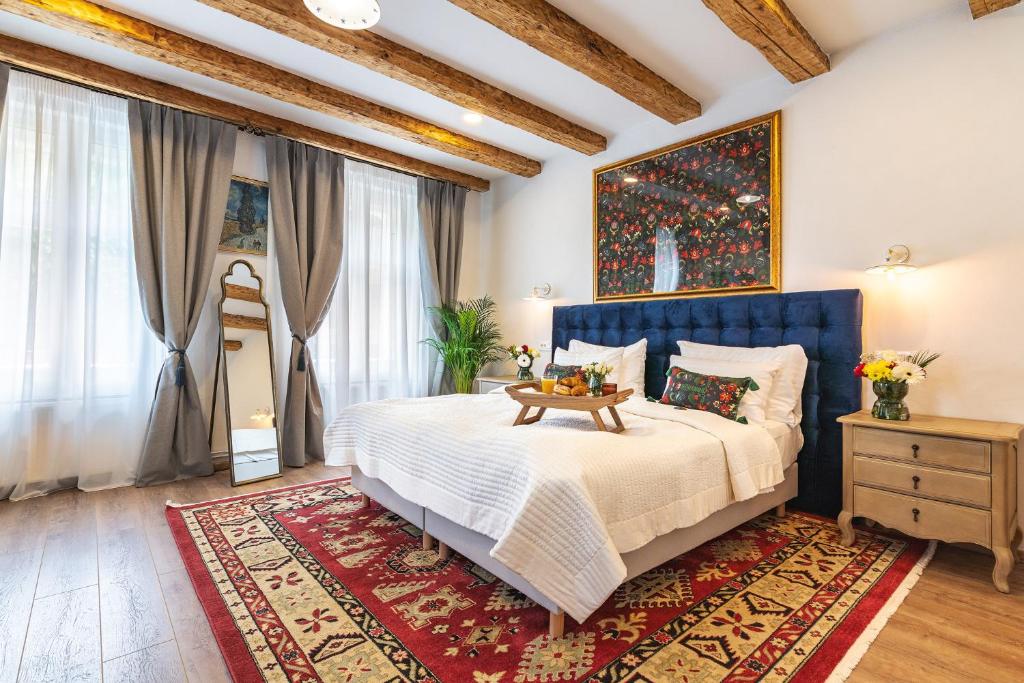
NIKOLAS HAUS 4*

9.7 Rating from 298 Reviews!

This exceptional apart-hotel is located in the quiet Schei Quarter of Brasov, just 10 minutes from the medieval center. It offers top accommodation in excellent units that have amazing design and are perfectly equipped!
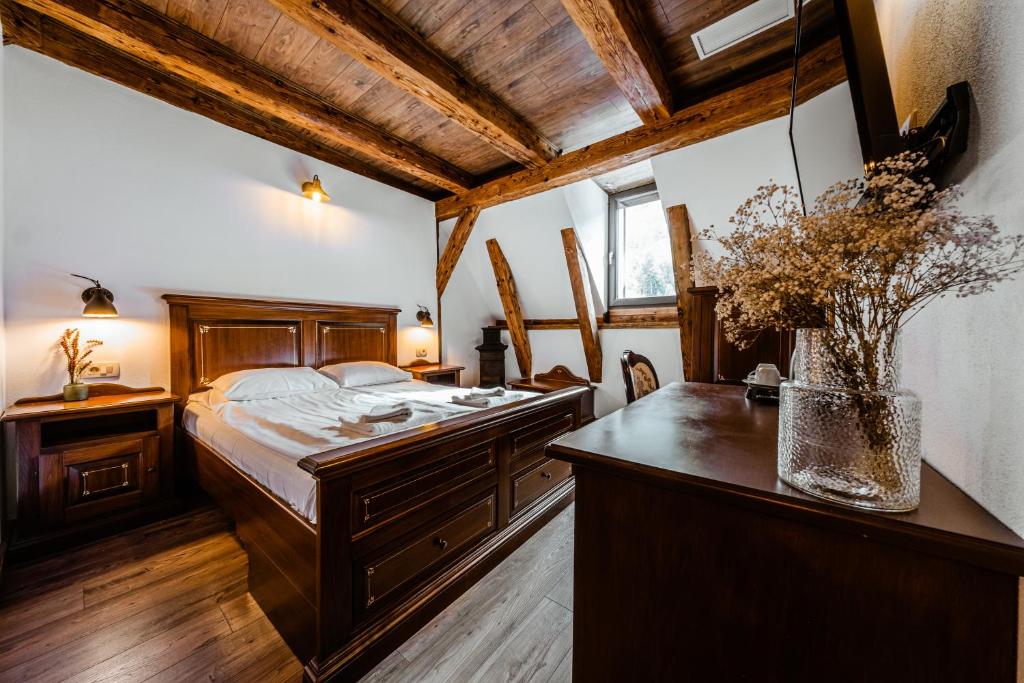
CHITIC House 3*

9.3 Rating from 2.373 Reviews!

Located in a historical building just a few steps from the Council Square, this exquisite hotel and restaurant offers excellent rooms with all the necessary amenities, continental breakfast and friendly staff!
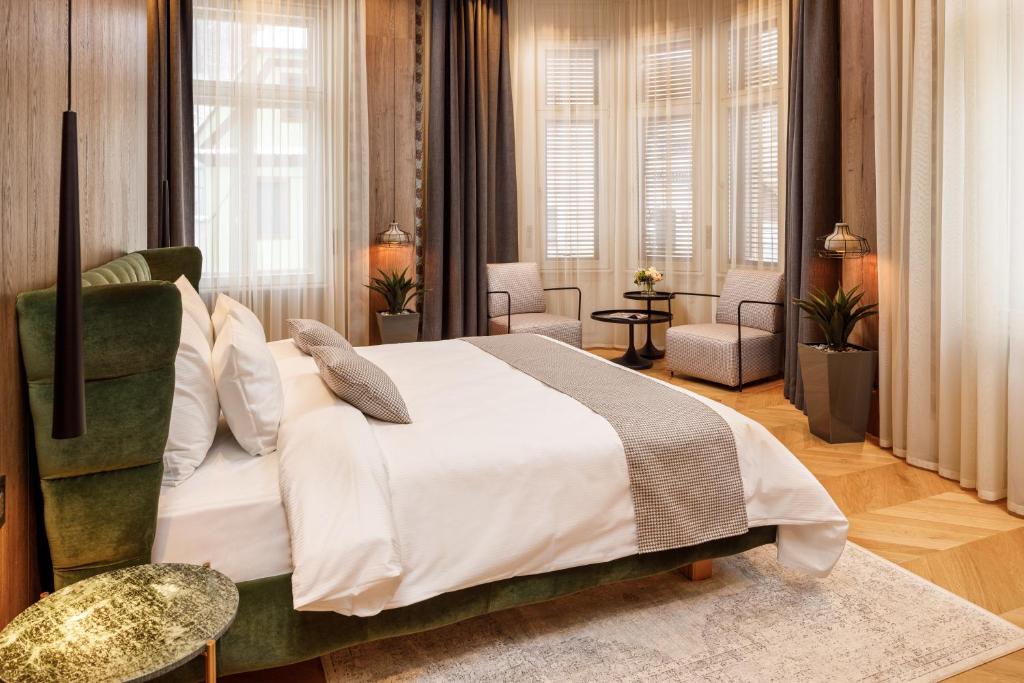
Schuster House 3*

9.7 Rating from 873 Reviews!

This excellent boarding house is located inside the old town of Brașov, just 100 meters from Rope Street. It features exquisite design and cozy rooms. Guests can also enjoy the terrace and delicious daily breakfast!

Tourist Map of Brasov © Silviu-Florin Salomia

BEST Restaurants in Brasov

  • Sergiana Restaurant – Mureșenilor St. No. 28 – One of the most sought after and appraised restaurants in the city, it offers traditional Romanian cuisine and local wines in a delightful atmosphere!
  • Hirscher House Restaurant – Council Square 12-14 – Located right in the heart of the old town, this exquisite restaurant offers delicious Italian, Mediterranean, Romanian and other delicacies in an elegant setting!
  • La Ceaun Restaurant – Council Square 11-12 – Located in the main square of Brașov, this traditional restaurant offers excellent local recipes at affordable prices, as well as a nice ambiance and friendly staff!
  • Ograda Restaurant – Council Square 14 – One of the top-rated restaurants in the city and located in right in the main square, it features delicious Romanian and Eastern European cuisine!
  • Cucinino Pasta & Pizza – Diaconu Coresi St. No. 6 – Located just a few minutes from the main square, this amazing restaurant offers authentic Italian and Mediterranean recipes, including delicious pizza, pasta and seafood!
  • Keller Steak House – Apollonia Hirscher St. No 2 – Featuring excellent steak recipes and other delicious recipes, this restaurant is located in the heart of Brașov!
  • Home Cocktail Bar – Sfantul Ioan St. No. 26 – Featuring a charming and peaceful atmosphere, this little bar is located just minutes from the main square and offers amazing cocktails, lemonade and coffee!
Leave a Comment

Your email address will not be published. Required fields are marked *

Scroll to Top